aBOUT uS
About the Book
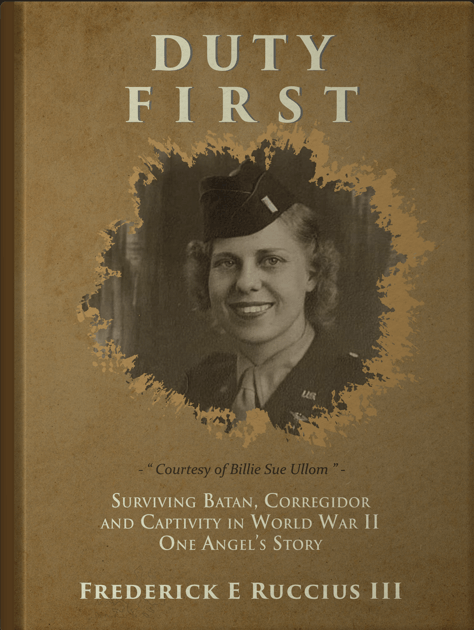
Duty First
Early Life & Roots of Resilience: The book traces Madeline’s upbringing in O’Neill, Nebraska, during the Depression and the Dust Bowl era. This background in a “thrifty” farming community instilled in her a “making do” mindset that proved vital for surviving years of captivity.
Pre-War Service: After training in Philadelphia, Madeline joined the Army Nurse Corps and was assigned to Walter Reed Army Hospital before being sent to the Philippines in 1940. The book describes the “idyllic life” of pre-war Manila, which ended abruptly with the attacks on December 8, 1941.
Active Combat & Retreat: Madeline served through the intense bombings on Bataan and lived a “mole-like existence” in the Malinta Tunnel on Corregidor. She worked tirelessly in operating rooms as the American and Filipino forces were forced into retreat and eventual surrender.
Captivity in Santo Tomas: Following the surrender of Corregidor in May 1942, Madeline and other nurses were interned at the Santo Tomas Internment Camp (STIC) in Manila. The book details the monotonous but harsh life of captivity, characterized by extreme food shortages, diseases caused by malnutrition, and the constant psychological strain of imprisonment.

Frederick E. Ruccius
About The Author
Frederick E. Ruccius first met Madeline Ullom in 1997 while serving as Director of Trusts and Estates at Thomas Jefferson University. Over several years, he developed a close friendship with her and became one of the few people to hear her full story firsthand.
After Madeline’s death in 2001, previously unknown materials — including her secret diary — came to light. This book represents decades of research, interviews, archival work, and personal remembrance.
Duty First is not only a historical biography, but a tribute to a friend.
About the Main Character
Madeline Ullom
Madeline M. Ullom (1911–2001) was a distinguished U.S. Army nurse and one of the first American women to be held as a prisoner of war (POW). Known for her unwavering commitment to the motto “Duty First,” her life story is a testament to the resilience of the human spirit during World War II.
Early Life and Education: Born on New Year’s Day in O’Neill, Nebraska, she grew up in a “sturdy and hardy” pioneer-spirited community.
Resilience: Surviving the Depression and the Dust Bowl in Nebraska taught her a “making do” mindset that proved vital during her later captivity.
Education: She graduated as valedictorian from St. Mary’s school in 1930 and worked as a teacher for four years before pursuing nursing at Philadelphia’s Jefferson Hospital.
Military Service and the War
Deployment: Madeline joined the Regular Army and was assigned to the Philippines in 1940, arriving in Manila on the USS Republic.
Front Lines: When war broke out on December 8, 1941, she served through the heavy bombings of Bataan and later lived a “mole-like existence” in the Malinta Tunnel on Corregidor, caring for the wounded under constant fire.
Captivity: After the surrender of Corregidor in May 1942, she was interned for nearly three years at the Santo Tomas Internment Camp (STIC) in Manila.
The Secret Diary
Madeline is uniquely recognized for keeping a contemporaneous diary during her 37 months of captivity—an act punishable by death if discovered by Japanese guards.
Secrecy: She hid tiny, thin onion-paper pages inside a handmade fabric “envelope” pinned to her skirt.
Historical Record: The diary remains the only day-by-day written account by a captive nurse from that time, documenting the physical toll of malnutrition as her handwriting deteriorated over the years.
Liberation and Post-War Career
Heroic Dedication: On the night of her liberation (February 3, 1945), instead of celebrating, she immediately went to work in the operating room to save wounded American soldiers.
Career: She remained in the Army for 30 years, retiring as a Lieutenant Colonel.
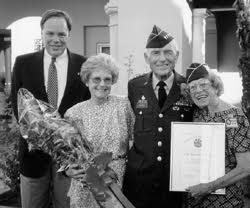
Honors: In 1998, she received an honorary Doctor of Humane Letters from Thomas Jefferson University and was feted at the White House by President Reagan.
Madeline eventually retired to Tucson, Arizona, but was buried in her uniform in her hometown of O’Neill, Nebraska, in 2001.
A Moment of Reflection
“I thought I knew what freedom was, but you don’t know what freedom is until you lose it.”
— Madeline Ullom